
September 14, 2026
Screen Print vs DTF vs Vinyl, and Why We Still Pull a Squeegee
We get the same question dropped into our messages almost every week, right after somebody eyeballs a shirt they like: "Is this actually printed in your shop, or is this a drop shipper with a flag slapped on the logo?" Fair question. There's a lot of that going around in this space. So let's settle it, and while we're at it, let's settle the screen printed shirts vs DTF argument that comes up just as often.
Three ways a shirt gets its design: screen print, DTF, and vinyl. All three can look identical in a product photo. None of them feel the same on your chest six months later, and that's the part nobody tells you before you check out.
What Each One Actually Feels Like
Screen print pushes ink straight through a mesh screen into the fabric itself, so it becomes part of the shirt. Run your thumb over it and you'll feel a slight texture, like the design is sitting just under the surface instead of on top of it. DTF (a design printed onto film, then heat pressed on like a sticker) looks sharp fresh out of the press, sometimes sharper than screen print at first glance, but it's sitting on the fabric, not in it, and you can feel that smooth, slightly plastic layer the second you touch it. Vinyl is a single flat sheet cut to shape and pressed on, great for a jersey number or a one-off name, but it's the stiffest of the three and the least willing to move with a shirt that gets worn hard.
Which One Cracks First
Every print wears eventually. Anybody who tells you otherwise is selling you something. Vinyl usually goes first, lifting at the edges because it's one solid piece fighting a shirt that wants to move in every direction, and once a corner lifts the rest peels behind it. DTF holds up a little longer, but that plastic layer starts to spiderweb wherever it flexes hard, across the shoulders or through a fold in the dryer, and you'll see the cracks before you feel them. Screen print just fades. It doesn't peel off in one gross sheet, because the ink is worked into the weave and ages the way the rest of the shirt ages, a little softer and a little lighter after a couple hundred washes instead of falling apart after one bad one.
We Pull Every Squeegee Ourselves
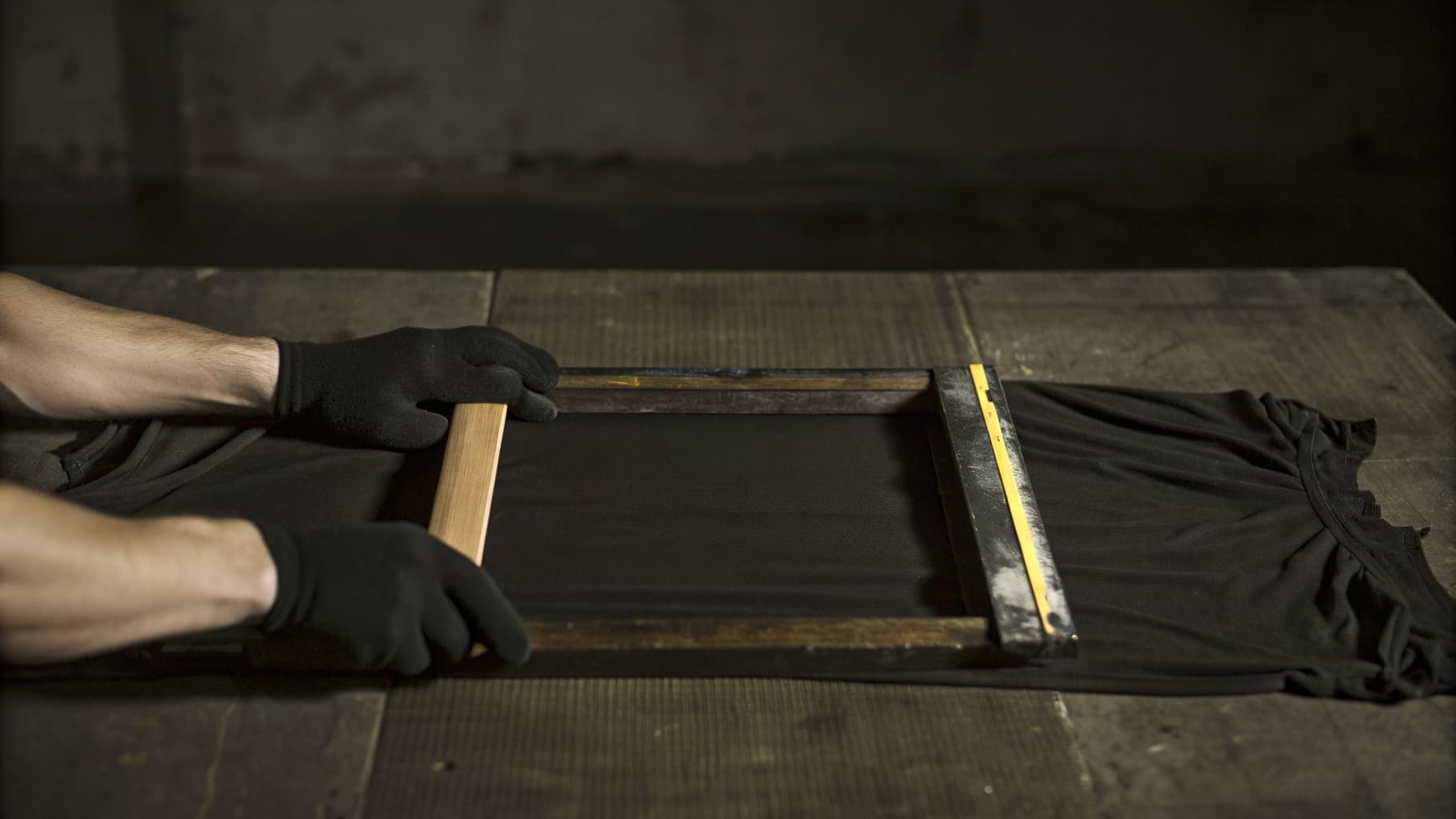
Here's the part that actually answers the question. We run our own press. When you see us post a design, that's our floor, our screens, our ink, and our squeegee getting pulled by hand for every run. Nobody overseas is touching your order. We don't believe in half-as*ing our shirts and hats, and shipping out the one part that actually makes it a Black Label shirt would be exactly that.
Why We Still Pull a Squeegee for the Shirts You'll Actually Wear
If you're buying something for a trail run, a tailgate at the truck show, or a shirt you're going to reach for every weekend all summer, screen print is the call. It takes sun, sweat, and the wash more times than DTF or vinyl will hold up for before they start showing it. We still use DTF and vinyl where they make sense, small detail work, short runs, a name and number nobody else needs. But for the shirt that's living in your rotation for the next two years, we're pulling a squeegee, not running a heat press over a sticker.
Got a design you want on a shirt built to actually survive the season? Send it our way and we'll hook you up. ;)