August 7, 2026
What Embroidered Hats Actually Cost, and Why the $12 Ones Fall Apart
Somebody walked up to our tent at a show a while back holding a hat he grabbed off a gas station rack for six bucks, flag stitched on the front, or so he thought. He asked flat out why our hats run two or three times what he paid. Fair question, and we don't dodge it. Here's what's actually going on under that patch.
So How Much Are Embroidered Hats Supposed To Cost?
There's no single number, and anybody who gives you one flat answer is selling you something. A basic five panel with a small flat logo runs different money than a structured trucker with a big raised patch and a heavy stitch fill. What actually moves the price is stitch count, thread type, backing, and the cap itself, before the design ever touches an embroidery machine. A hat with 8,000 stitches costs more to make than one with 3,000, because that machine is running longer and burning more thread, full stop. Anybody quoting you the same price for a tiny corner logo and a full front panel design either doesn't know what they're doing or is about to cut a corner you won't notice until the hat's a year old.
Mesh Back, Flexfit, Snapback: They're Not The Same Hat
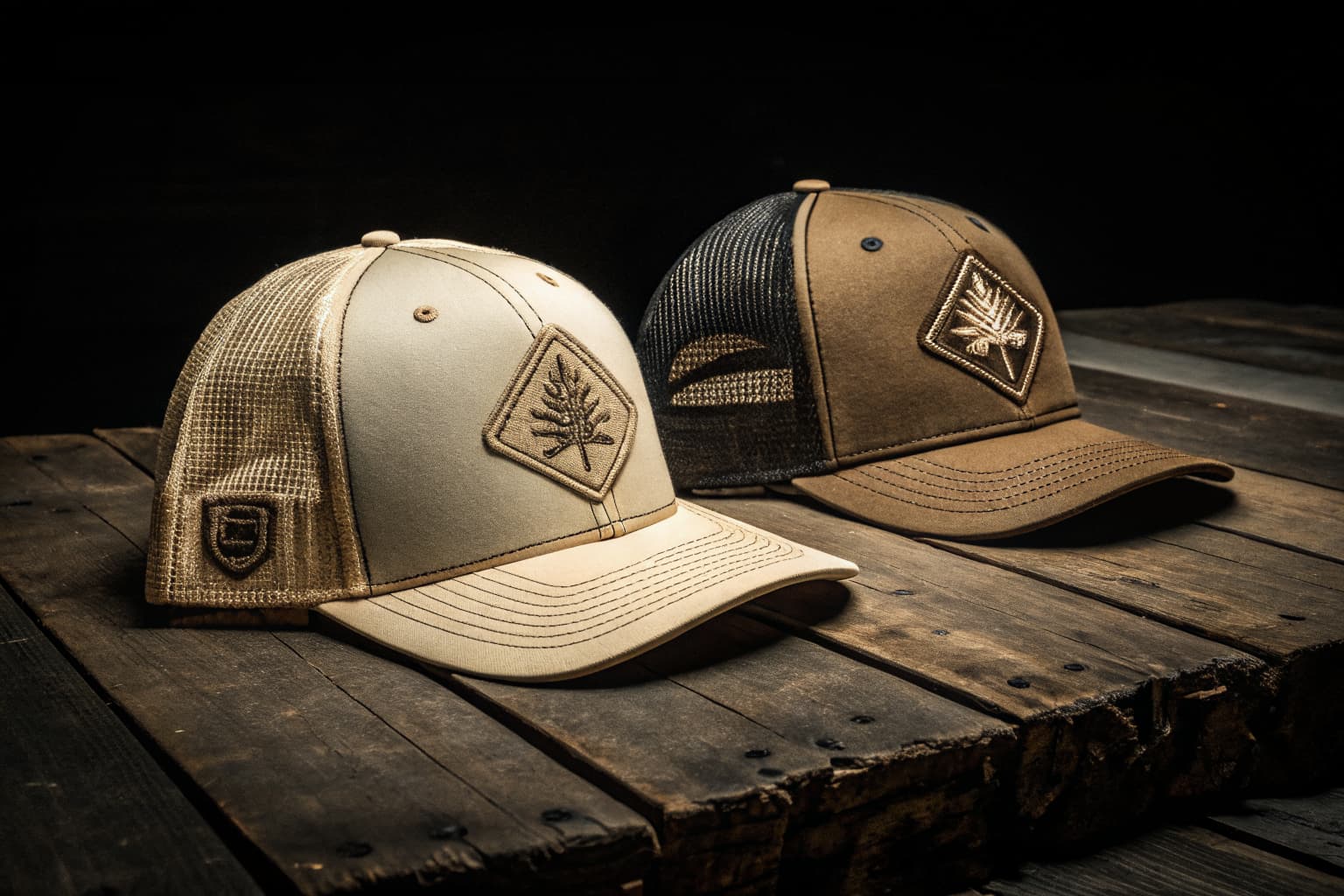
The blank underneath the embroidery matters as much as the stitching on top, and this is where the cheap ones cheat the hardest. A mesh back trucker holds its curve because of the foam front panel structure, a flexfit uses a stretch band that's supposed to hug your head with no strap, and a snapback relies on a plastic closure that either holds its click or strips out after a summer of one-handed adjusting while you're driving. Gas station hats usually run the thinnest foam they can get away with and a snap closure made from plastic that turns brittle in the sun. Ours use structured foam fronts that keep their shape, and closures built to survive getting tossed in a truck bed.
Patch vs Direct Embroidery: What You're Actually Buying
Direct embroidery means the design is stitched straight into the cap, thread by thread, and it moves with the fabric. A patch is embroidered separately and then glued or sewn onto the hat afterward, which is cheaper and faster to produce, and it's exactly why you see patches curling up at the corners on hats that are barely a season old. Glue dries out. Stitching doesn't. We'll run a patch when a design calls for it, a raised patch looks sharp on a structured front panel, but we sew them down properly instead of leaning on adhesive to do a stitch's job.
The Gas Station Hat vs Two Summers Of Real Wear
Here's the real test, not craftsmanship talk, actual wear. Put that six dollar hat through a summer of sweat, sun, and a couple washes. The brim goes soft and stops holding its curve. Cheap dye jobs start fading and going chalky within a few months, especially on reds and blacks. The foam front panel collapses so the hat looks tired sitting on a shelf, let alone on your head. A hat built right holds its shape because the materials underneath are doing the work, not because of how you bent the brim on day one. Ask anybody who's had one of ours two summers deep at a show. They'll show you the hat before they tell you about it.
How To Check A Hat Before You Buy It
You don't need to be in the business to spot the difference, you just need to look in the right spot. Flip the hat over and check the back of the embroidery. Clean, dense stitching with no loose threads or bare fabric showing through means it was done right. Press on the front panel. If it springs back to shape, that's real foam. If it stays flat and mushy, it's not surviving a wash, let alone two summers. And just ask straight up: stitched or glued, patch or direct. A shop that can't answer that fast is a shop that doesn't know what it sold you, or doesn't want to tell you.
We don't half-a** our hats, and we're not going to half-a** the answer either. If you want to feel the difference for yourself instead of taking our word for it, go put your hands on our headwear. We'll hook you up. ;)